


Cart is empty


Save 21%
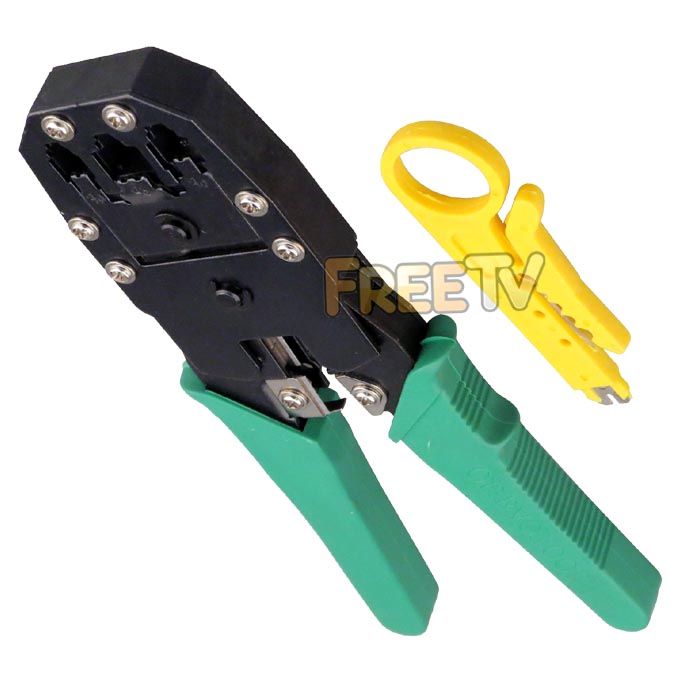

Description of RJ45 Crimping Tool
- Crimping Tool for RJ45 Connectors
- Also Crimps RJ11 Connectors
- Dimensions (LxW): 20cm x 8cm
- High Quality Construction
- Handle Design Allows Maximum Comfort During Extended Use
- Colour: Green & Black
- Comes With Cable Strippers
- CC 8203200000 0.300kg N
Uses of RJ45 Crimping Tool
- Crimp, cut & strip tool for networking and telephone applications
- Used for:
- Crimping RJ45 ethernet cable connectors onto CAT5 Cable
- Crimping RJ11 connectors onto telephone cable
- Suitable for DIYers & infrequent professional use
Advantages of RJ45 Crimping Tool
- Suits both the professional and DIYer
- Good and reliable tool that does the job
- Low cost model
- Suitable for use with RJ11 & RJ45 connectors
- Easy grip handles perfect for prolonged use
Disadvantages of RJ45 Crimping Tool
- Can only be used with CAT5 RJ45s - it can not be used with CAT6 RJ45s
- The more expensive crimping tool in our range may be better suited to the professional every day user of these crimping tools
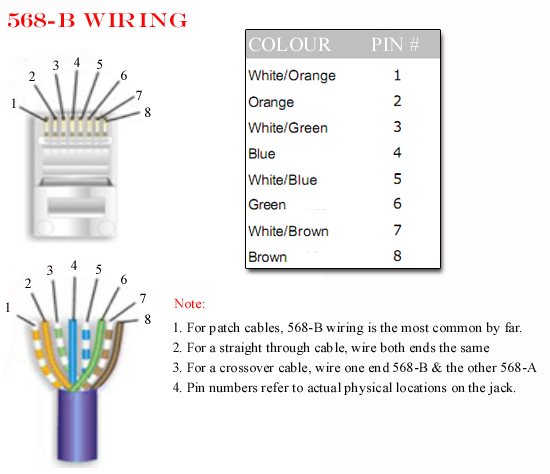
Below is documented the correct wiring format for a CAT5 Cable and detailed instruction for making a CAT5 Cable.
WIRING DIAGRAMS FOR A CAT5 CABLE
Notes
The diagram above is called a CAT5 Type B wiring method which is the one that is almost exclusively used in industry.
TO MAKE A CAT5 CABLE
Equipment needed
- Roll of CAT5 Cable
- RJ45 CRIMPING Tool
- RJ45 Connectors * 2
Steps
- Using a crimping tool remove the outer protective sleeve leaving around 25mm of cable exposed
- Next untwist each of the pairs of cables
- Line up the wires in accordance with the wiring diagram above
- Again using the crimping tool cut the cable leaving about 12-15mm of cable exposed.
- Push the cables into the RJ45 Plug
- Use the crimping tool to crimp the RJ45 Connector on the the cable
- Cut the CAT5 cable to the required lenght
- Repeat the process to put a connector on the far end
NOTES ON CAT5 WIRING
1. 568-A wring
There is an alternate wiring convention for CAT5 cables called 568-A. See diagram below:
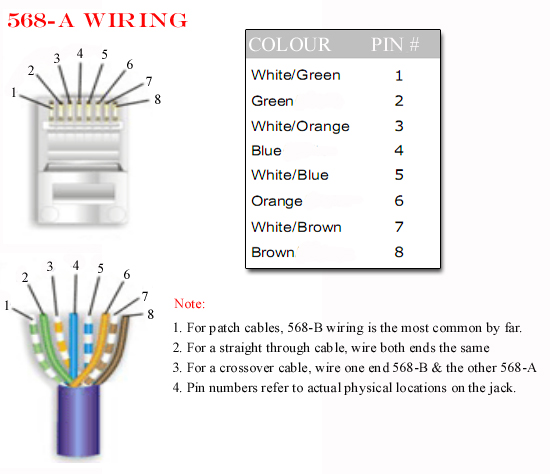
The most common use of this convention would be use a Type A & and a Type B connector to make a cross over cable.
2. Types of CAT5 Cable
- The most commonly used cat5 cable is UTP (Unshielded Twisted Pair) cable. This is suitable for homes and offices
- A more expensive option is to use FTP (Foil shielded Twisted Pair) cable
- Which gives greater interference protection when running next to power cables



